

Roadside baboons in Malava have become a popular attraction for motorists. But conservationists and health experts say feeding wild animals could expose both humans and wildlife to dangerous diseases, behavioural changes and increasing conflict. This report explores the science behind zoonotic diseases and why experts are urging the public to keep their distance.
A troop of baboons brave stifling heat on a sunny afternoon begging leftovers from motorists near an eatery in Malava town, along the busy Kakamega –Webuye highway.
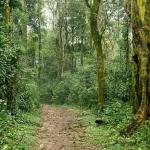
Ordinarily, they assemble here every day-a strategic spot on the edges of Malava forest from where generous people would occasionally offer them a meal.
They have learned to adapt to the human environment, recognizing that passing motorists or pedestrians mean an easy source of food. Old baboons keep a close eye to young ones’ movement, lest they be hit by reckless motorists.
Some leap between trees skillfully while others sit pensively by the roadside, perhaps wondering whether they will be lucky to get something to eat.
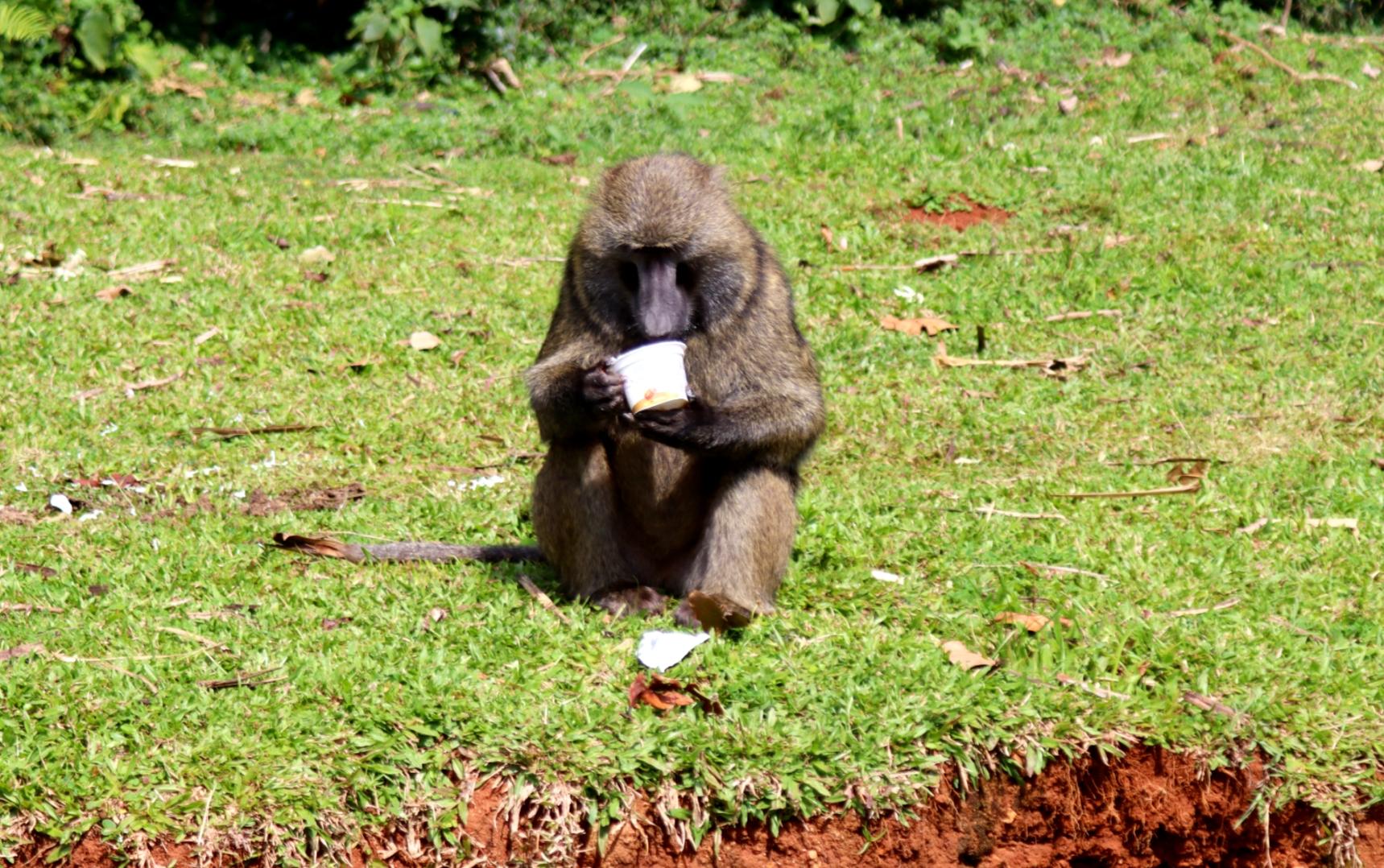
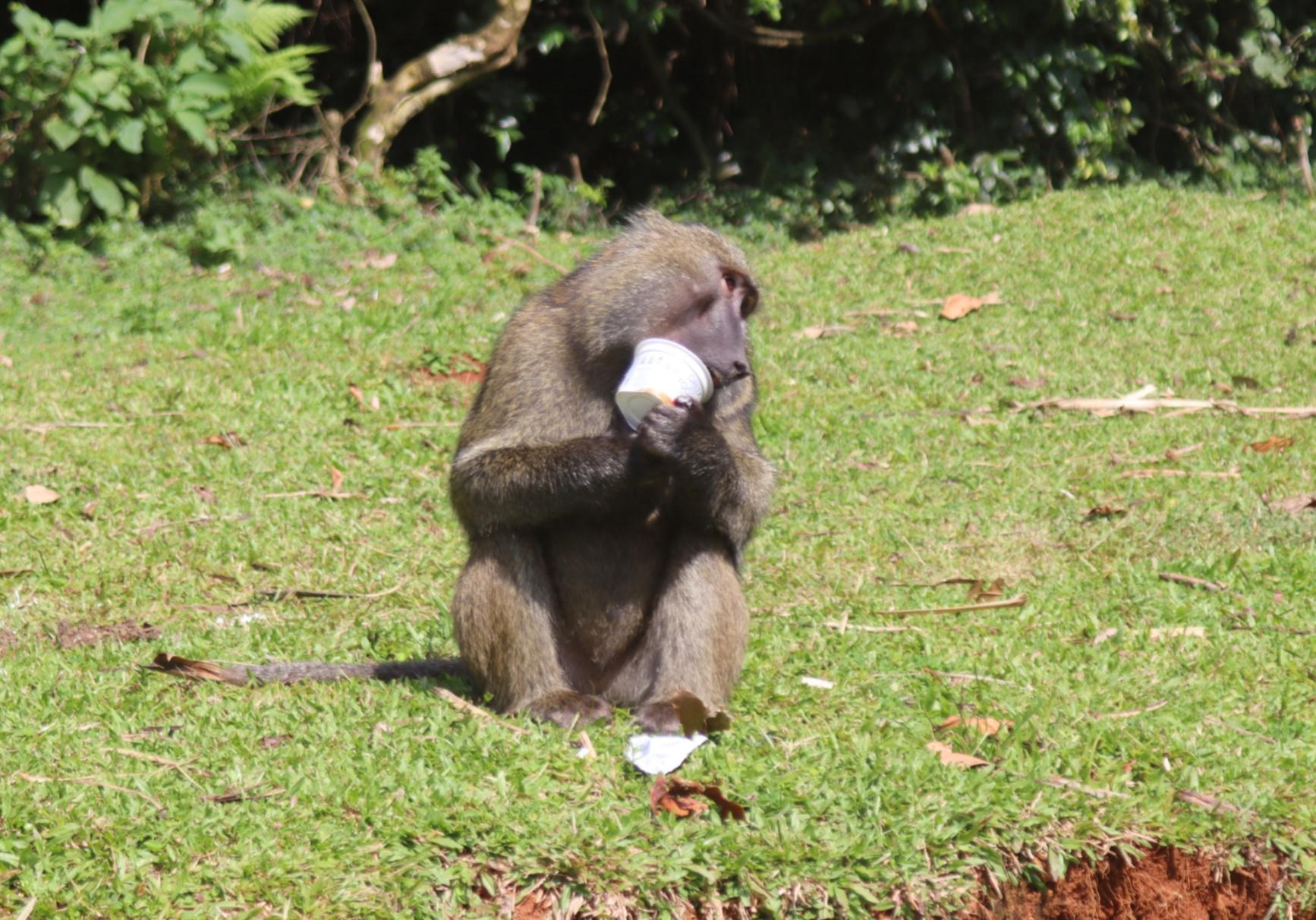
One baboon appears particularly engrossed. Clutching an empty yoghurt tin. She repeatedly peers inside, tilting the container as though searching for remnants of its contents. Every few moments, she lifts her head up to stare at passersby then shifts her focus to the tin again.
Her inquisitive look won’t just fade away-she appears to be in deep thought, somehow, she must get something to eat before the sun falls.
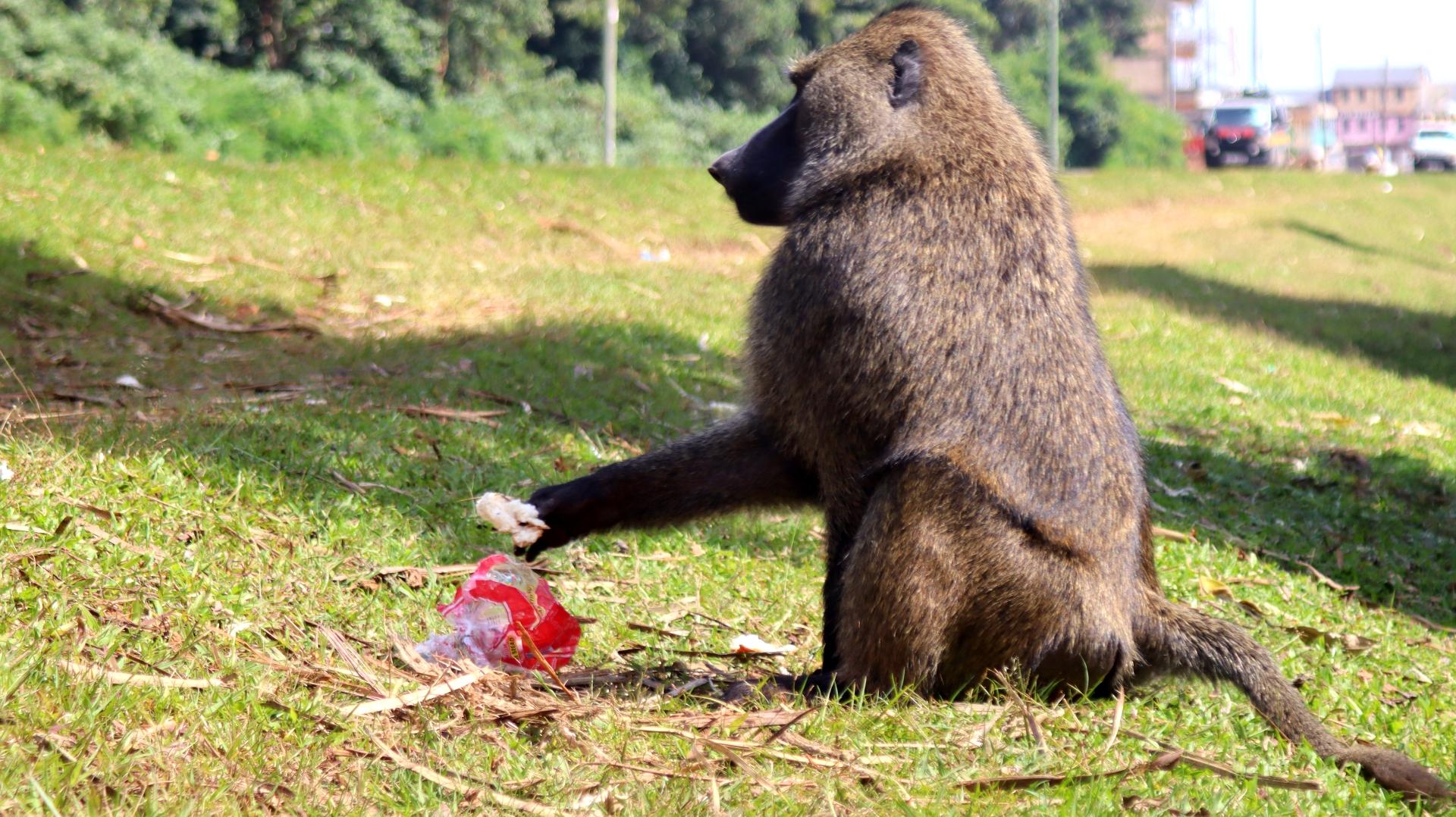
A few metres away, one of the baboons munches on a loaf of bread ravenously. Sugarcane peelings litter the roadside, an indication the troop’s previous visitor must have been such a generous person.
While some motorists would slow down to toss bananas and leftovers to the primates, much to the excitement of their passengers, before driving off.
Residents of Malava are accustomed to the baboons. "We have lived with these baboons for long and we treat them like our first cousins, because that is what science says," says Joseph Shisia, a local who lives near the forest.
"We interact with them every day but also pick quarrels with them more often. Sometimes, they sneak into our homes and steal bananas, valuables or even grab our chicken,” says Shisia.
He insists that despite the challenges, the animals remain familiar neighbors rather than distant wildlife. "They are not violent per se, and always behave like a good neighbor who only becomes stubborn when hungry."
Yet beneath their peaceful co-existence lies simmering concerns among conservationists and health experts. Scientists warn that continuous interaction and sharing food and space between humans and primates could lead to a crisis. According to experts, the boundary separating the two worlds is becoming thinner.
Karen Ndiema, a senior Warden in charge of Kakamega forest reserve cites cases of people feeding monkeys and other wildlife as one of the practices that could trigger behavioral changes that create long-term problems.
While doing so may appear harmless “when people feed wild animals, their behavior changes," she says.
For instance, animals begin associating humans with food, increasing chances of them moving out of the forest, queuing on roadsides and straying into homes or public spaces in search of easy food.
Ndiema warns that this can increase cases of human-wildlife conflict, injuries and property destruction. Such cases are being reported by locals neighboring the forest. According to Shisia, monkeys and baboons have been sneaking into homes and stealing foodstuffs.
"They know where to get an improved diet to supplement the roots and fruits readily available inside the forest," he says with a broad smile. “That's why you will see them lining up by the roadside. They know motorists will stop and give them bananas, yoghurt, bread and other things."
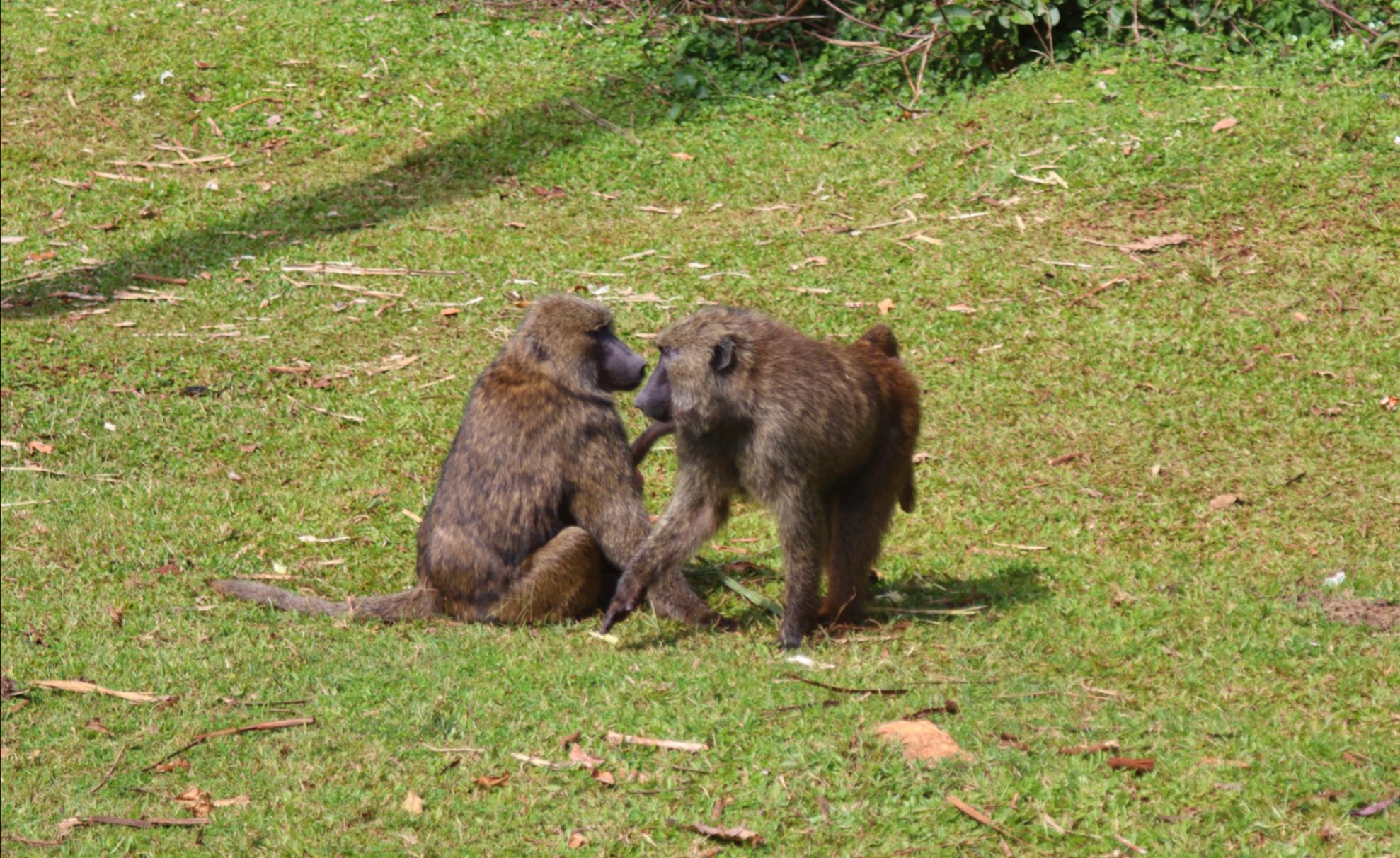
Sometimes, however, the encounters may get ugly.
"Some people will tease them with foodstuff, causing monkeys to jump onto them to grab food," he noted and revisited an incident where a monkey injured a man while trying to snatch a loaf of bread from him.
Wildlife experts say such incidents become more common when animals lose their natural caution around people. Beyond immediate injuries, feeding wildlife can also expose animals to foods they would never consume in their natural habitats, potentially affecting their health and altering their natural behavior.
The issue however extends beyond conservation. Experts warn that close interactions between humans and wildlife increases opportunities for zoonotic diseases (illnesses that can pass between animals and humans).
Many of the world's most significant infectious disease outbreaks have involved pathogens that originated in animals before crossing into human populations according to Dr Wilberforce Cholo, an epidemiologist at Masinde Muliro University of Science and Technology (MMUST).
He opines that environmental changes are increasing opportunities for human – wildlife interactions.
"Deforestation, agricultural expansion and human encroachment into wildlife habitats increase contact between people and animals," he explains.
Zoonotic diseases have shaped some of the world's most significant public health emergencies. Ebola is believed to have originated from contact between humans and infected wildlife, with fruit bats widely regarded as its natural reservoir.
Other diseases such as Marburg virus disease, Mpox (formerly monkeypox), rabies and even COVID-19 are also linked to animal-to-human transmission, although their origins and transmission pathways differ. Scientists say these examples underscore why monitoring interactions between people and wildlife has become an increasingly important part of disease prevention.
As forests are cleared for farming, settlement and other activities, wildlife habitats shrink, forcing animals and humans into closer proximity according to the scholar. "Humans enter previously undisturbed ecosystems while wildlife moves closer to communities. This increase opportunities for disease transmission,” says Cholo.
The Scientists refer to this process as spill-over the moment a pathogen (a disease-causing agent) moves from an animal host into a human population. Although such events are relatively rare, history shows they can have profound consequences when they occur. The challenge, according to epidemiologists, is that people often fail to recognize the risks because interactions with wildlife become normalized.
Unlike physical injuries caused by animal attacks, infectious disease threats are often invisible. Dr. Sabella J. Kiprono, a virologist at MMUST, notes that many pathogens can circulate within wildlife populations without immediately attracting attention.
Some animal species can act as reservoirs, harboring or temporarily hosting disease-causing organisms that may eventually find opportunities to infect humans. Understanding how these pathogens move between species has become an increasingly important area of scientific research.
Whilst it is true that every monkey, baboon, bat or wild animal carries a dangerous disease, scientists are rather concerned that frequent and close interactions between humans and wildlife increased opportunities for transmission events to occur. Such risks become even more significant when people directly handle animals, share food with them, or come into contact with their bodily fluids.
For epidemiologists, detecting unusual illnesses early is critical. Dr. Cholo describes surveillance as the backbone of outbreak control.
"You cannot control what you do not know exists," he says.
Surveillance involves continuously monitoring disease patterns, unusual illnesses and unexplained deaths to identify potential threats before they become major public health emergencies. The earlier a disease is detected, the easier it becomes to contain.
Communities themselves often serve as the first line of defense. Residents, healthcare workers and local leaders are often the first to notice unusual patterns, whether among people, livestock or wildlife.
In some cases, unusual animal illnesses or deaths may provide important warning signs that warrant investigation. This makes public awareness as important as scientific expertise.
Experts stress that coexistence between people and wildlife remains possible and necessary and that the solution is not fear, nor is it avoiding forests altogether. Instead, wildlife and public health specialists advocate for responsible interactions that maintain healthy boundaries between humans and animals.
Ms. Ndiema advises members of the public to avoid feeding wild animals and to report problematic wildlife encounters to Kenya Wildlife Service. She also emphasizes the importance of protecting natural habitats and promoting land-use practices that reduce conflict between communities and wildlife.
Fast-forward to Malava, the baboons go about their routine unbothered after managing a bite each. They look excited with some chasing after each other through the trees as others sit quietly by the roadside, watching vehicles pass.
The monkey with the yoghurt tin eventually abandons it after a thorough search for the last drop and joins the rest.
For now, the encounter appears harmless. It is merely a familiar spectacle for residents and a curious attraction for travellers. Yet the scene also depicts deeper concerns among communities living near such eco-systems.
As the line between human and wildlife spaces continues to blur, one question lingers, how close is too close? Its answer may shape not only the future of conservation, but also the health of both people and the wildlife.




Comments (0)