
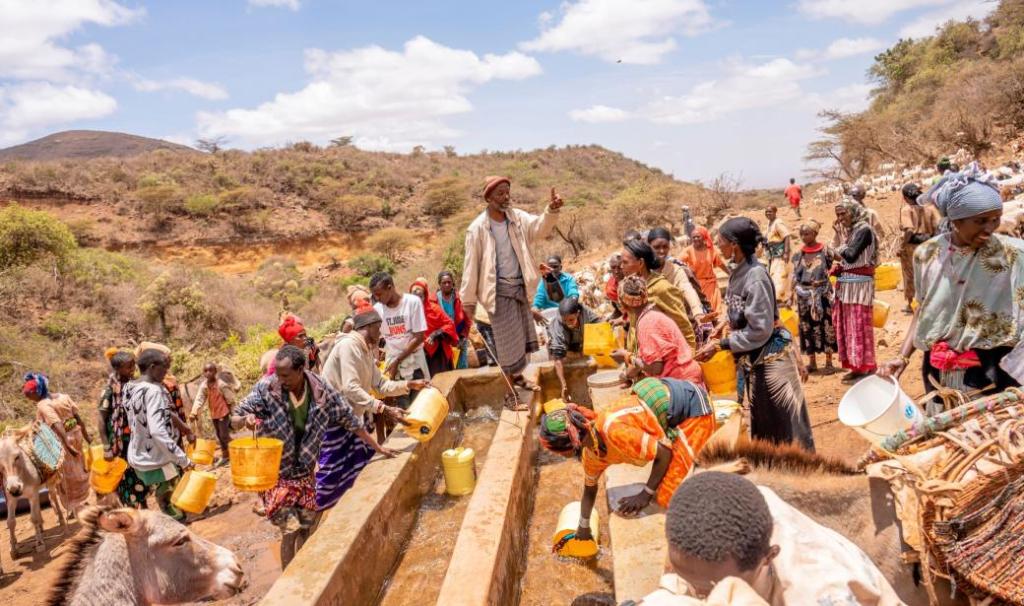
Kenya has secured US$700,000 from the Santiago Network to document the full cost of climate-related loss and damage, in an effort to strengthen planning, improve climate finance access and support communities affected by droughts, floods and other climate shocks.
By Shahidi Digital editorial
For years, Kenya has responded to droughts, floods and failed rains after disaster strikes. But many losses, livestock deaths, school dropouts, trauma, migration, malnutrition, lost cultural heritage and collapsed livelihoods remain poorly documented.
Kenya is now attempting to change that.
The country has secured technical assistance worth up to US$700,000 from the Santiago Network to conduct a countrywide assessment of climate-related loss and damage experienced over the past decade.
The development was formally communicated to the Principal Secretary for Environment and Climate Change, Dr Eng. Festus K. Ng’eno, by Santiago Network representative Elizabeth Carabine during the ongoing climate negotiations in Bonn.
The assessment will examine economic and non-economic losses linked to climate change between 2015 and 2025, while also developing projections of possible climate-related damage up to 2035.
According to the Santiago Network, the support is meant to “strengthen Kenya’s capacities” to assess loss and damage across sectors and support medium-term planning and decision-making.
The initiative is not direct compensation to families affected by droughts, floods or crop failure. Instead, it is designed to solve a long-standing gap in Kenya’s climate response: the lack of a comprehensive national evidence base showing what has been lost, who has suffered most and what support is needed for recovery.
For Kenya, that gap is costly.
The 2020–2023 drought was described in government-linked documents as the worst in more than four decades. By late 2022, about 5.1 million Kenyans were facing acute food insecurity, while an estimated 2.5 million livestock had died. In 2023, humanitarian agencies reported that drought-related livestock deaths had risen to about 2.6 million.
In pastoralist counties, those animals were source of livelihood. They provided milk, income, school fees, dowry, savings, cultural identity and social security.
In Marsabit, where the World Health Organization documented the impact of drought in 2022, camel herder Lerren Lekale captured the desperation facing families whose survival depends on livestock. “If they die, we die too,” he said.
That is the kind of loss Kenya now wants properly documented.
The Santiago Network says the assessment will “identify, quantify, and document impacts” to inform national policies, planning processes and investment strategies. It is expected to examine losses in agriculture, water, health, infrastructure, livelihoods, ecosystems and human mobility.
If done well, the assessment could help Kenya move from emergency response to evidence-based climate planning. It could show which counties are most exposed, which communities need urgent support, which sectors are absorbing the greatest losses and what kind of investment is required to reduce future damage.
The findings could also help counties shape climate action plans, disaster preparedness, budget allocations and resilience programs. For farmers, pastoralists, fisherfolk and families living in flood-prone areas, the process could turn lived suffering into documented evidence that can attract targeted support.
But the funding has limits.
The US$700,000 will not restock dead animals, rebuild destroyed homes or compensate farmers whose crops failed. Its value is technical. It can help Kenya build evidence, but whether that evidence leads to real support will depend on how national agencies, counties and climate finance institutions use the findings.
Another test will be whether the assessment captures the losses communities say matter most. Roads, bridges and farms are easier to count. Trauma, school dropouts, malnutrition, forced migration, loss of cultural sites, broken social networks and the collapse of local livelihoods are harder to measure, yet they shape how families recover after climate disasters.
The assessment also comes as Kenya faces sharper climate swings. After prolonged drought, parts of the country have been hit by destructive floods that swept away homes, farms, businesses and infrastructure.
The Kenya Meteorological Department’s State of the Climate in Kenya 2023 report says floods affected 38 counties during the October–December short rains season, with more than 757,000 people affected and over 25,000 acres of farmland destroyed.
For years, Kenya has argued that it contributes little to global emissions but pays heavily for climate disasters. The new assessment could give the country stronger evidence in climate finance negotiations, especially on loss and damage.
For communities already living with the consequences of droughts, floods and failed rains, the question is whether that harm will be counted, recognized and used to help them rebuild.
Kenya’s US$700,000 allocation is a starting point, an attempt to answer a question communities have asked for years: when climate disasters destroy lives and livelihoods, who counts the loss, and who helps them recover?


Comments (0)