

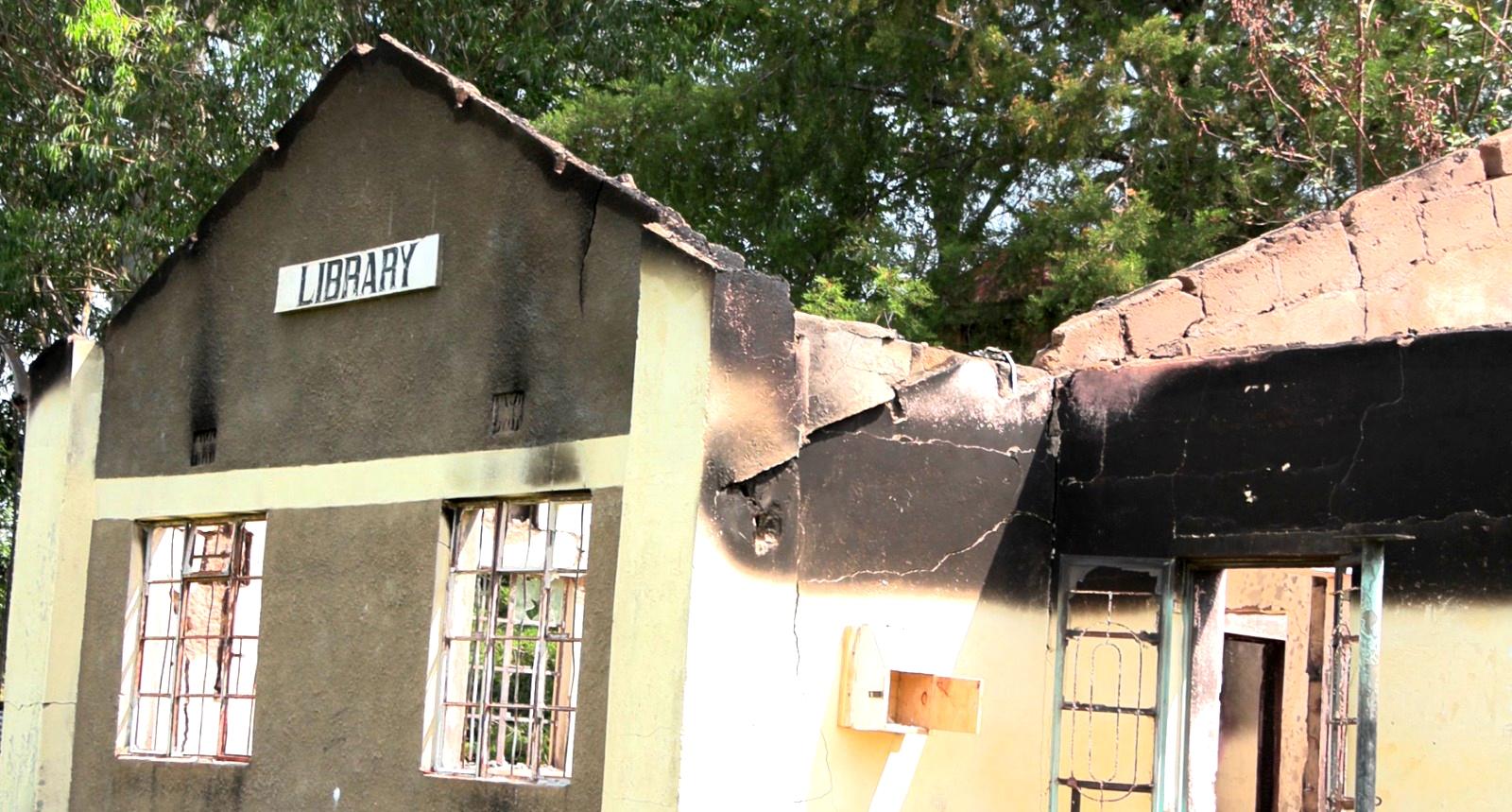
The smell of smoke had long faded, but the silence remained. Rows of books that once opened young minds to the world had been reduced to pale heaps of ash.
Twisted metal shelves stood like skeletons inside what had been a bustling library with charred pages, too fragile to touch strewn across the floor - some carrying faint traces of words that would never be read again.
Fire had spared almost nothing - not even decades of the school's rich history. Files dating back to the 1960s had vanished in the inferno. Records that chronicled generations of students, teachers and milestones had disappeared in a single night.
A nearby bloc housing the guidance and counselling department had also been torched but a sign at the entrance still clung to the wall, half charred. Its blackened edges silently bearing witness to the anger that swept through the school.
Standing there, one question lingered. Why would students destroy the very place meant to listen to them, counsel them and help them through their struggles? It remains the elephant in the room as Kenya grapples with a worrying resurgence of student unrest.
The recent fire at Utumishi Girls Academy shook the nation and reignited debate about what could be driving learners to such extreme actions.
Education experts, parents, religious leaders and mental health professionals all point to different symptoms. Yet they contend the crisis rarely begins inside school gates.
For Catherine Matioli, a guidance and counselling teacher at Mukumu Boys High School, the challenge starts long before students report to school.
She says today's learners come from vastly different family backgrounds. Some arrive having never experienced consistent discipline. Others grow up with little parental supervision as families struggle to balance work and parenting.
Handling more than a thousand boys with only a handful of teachers has become increasingly demanding according to her. Cases of indiscipline now range from minor misconduct to serious offences requiring intervention from parents, counsellors and school administrators, says the teacher.
She believes schools cannot solve the problem alone. "Parents must step up their game. Most of them are too busy for their children, they don't even understand them."
That concern is echoed by Jackson Luchera Wanzala, chairman of the Parents Association at Kakamega Primary and Junior School. He believes discipline begins at home and should start early, before bad habits become deeply rooted.
Wanzala laments that many parents have become reluctant to correct their own children, while neighbours and other members of the community fear stepping in lest they be accused of interfering. "The problem starts at home. We have failed to know our role in raising our children," he observes. As children grow without clear boundaries, he argues, schools inherit behavioural problems that teachers alone cannot resolve.
St. Ignatius Mukumu Boys High school principal Sylvester Ashioya has watched those pressures play out in schools. He describes the recent unrest as unfortunate and says schools are increasingly receiving children who have spent much of their formative years away from close parental guidance. "Many begin boarding school at a young age, limiting the time families have to shape their character."
Ashioya notes that while corporal punishment has long been outlawed, many schools still lack professionally trained counsellors to fill the gap."Guidance and counselling departments exist in many institutions but they often depend on teachers whose primary responsibility is classroom instruction," he reveals.
The head teacher believes investing in trained counsellors would strengthen schools' ability to identify struggling learners before frustration boils over into violence.
Mukumu Boys has responded to the unrest by strengthening guidance and counselling, holding regular forums between students and the administration, involving the school chaplain and inviting motivational speakers to mentor learners. "We have also intensified efforts to keep drugs out of our compound through routine inspections and close collaboration with parents," says Ashioya.
Dr. Wycliffe Mutile, a psychiatrist warns that substance abuse among young people is becoming a growing public health concern. "Many children encounter alcohol and drugs within their own environments before they ever reach secondary school and by the time some arrive in school, they are already experimenting with addictive substances and influencing their peers."
He regrets that parents make a big mistake by defending their children even when the warning signs are clear.
The expert says behavioural changes such as poor academic performance, withdrawal, neglect of personal hygiene, depression and sudden aggression may signal deeper problems requiring professional intervention rather than punishment alone.
Dr Mutile suggests every school should have access to psychologists and trained mental health professionals capable of identifying problems early and supporting behavioural change before students spiral into addiction or criminal behaviour.
The renowned psychiatrist also calls for stronger government action against drug traffickers and greater investment in mental health education within schools.
For Apostle Ken Baraza, patron of the Western Kenya University Students Association and the Kakamega county chaplain, the crisis extends beyond schools and homes. He believes society has gradually abandoned the collective responsibility of raising children.
"There was a time when every responsible adult could guide a child, not anymore - today everyone says, that is not my child," the man of cloth says.
Baraza who is also the founder of New House of Grace International church urges churches to become safe spaces where young people are heard rather than judged. He believes students need mentors who will listen patiently to their frustrations before the situation gets out of hand.
The cleric challenges political leaders to stop exploiting unemployed youth for violence during political contests, arguing that some young people are introduced to lawlessness long before they complete school.
Many stakeholders agree that burning a dormitory, a classroom or a library is rarely an isolated act, often the final spark after years of neglect, broken communication, drug exposure, emotional distress and weakened family structures.
While schools can rebuild walls, replace desks restock libraries, many actors in education sector insist it would be impossible to restore, lives lost, handwritten records that preserved decades of history, memories of generations that passed through those classrooms, or the confidence that schools should remain safe places for learning.
As the country reflects on the recent wave of unrest, expert la insists that parents must reclaim their role as the first teachers of discipline while schools should invest in professional counselling and create spaces where students feel heard with religious institutions and communities expected provide mentorship beyond the classroom.
The government ought to strengthen efforts against drug trafficking while expanding mental health services in schools and children should never feel invisible because sometimes, before a school catches fire, there are quieter flames - burning inside the young people who walk its corridors every day.
"If those silent fires go unnoticed, the next blaze may consume far more than buildings. It may destroy another piece of the nation's future," warns experts.


Comments (0)