

Donning grey t-shirts and white caps, the graduands smiled as they approached the podium at the Salvation Army grounds, located along the Kisumu-Kakamega Highway.
The 168 men and women had been looking forward to this event. They comprise the first cohort of Trainers of Trainers (ToTs) who underwent rigorous training under the National Agricultural Value Chains Development Project's (NAVCDP) Farmers Field and Business School programme.
In next few days, the new graduates will be out there interacting with farmers on a mission to impart skills and knowledge on modern farming technologies and management practices. They will reach over 5,000 farmers spread across 80 wards in Kakamega County.
The devolved unit is among those whose economy is anchored on agriculture and has been intentional on rolling out farmer education, climate-smart agriculture and improved livestock genetics to raise productivity and incomes.
Governor Fernandes Barasa, who graced the pass out for the new ToTs has described the initiative as an investment in the county's future. "It is a clear demonstration of our commitment to transform agriculture through knowledge, innovation and farmer empowerment. Capacity building of manpower is at the core of sustainable development across all sectors in the modern economy," says the county chief.
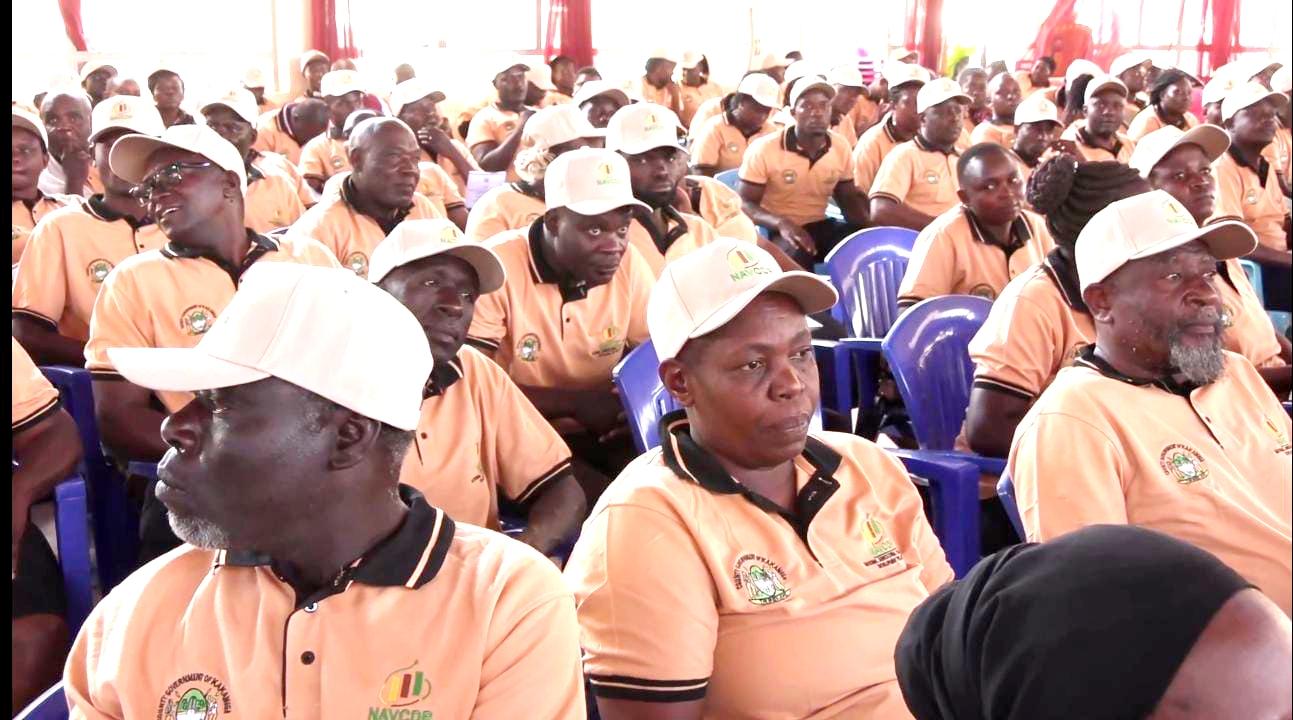
He acknowledges the graduates' resilience and commitment throughout the training and has encouraged them to serve as agents of change in their communities. "We commission you as ambassadors of modern farming practices, confident that you will play a critical role in transferring knowledge to thousands of farmers across the county," he noted.
Kakamega has recorded an improvement in production of maize, Beans, traditional vegetables and honey among others. Some of the local farmers also practice dairy and bee farming.
The county is home to key sugar factories and a leading producer of sugar. Governor Barasa says through partnership with the National Agricultural Value Chains Development Project, Ksh102.8 million has been disbursed to at least 328 farmer groups as grants and more than 220,000 farmers have been reached. So far, 715 agripreneur jobs have been generated across the county.
Governor Barasa's administration is also keen on diversification and is gradually channeling resources into establishing smart dairy farms across sub-counties with a view of making Kakamega a chief milk exporter. Currently, the county is ranked among net importers of milk with huge volumes of the commodity flowing in from neighbouring Nandi and Uasin Gishu counties.
Dozens of journalists drawn from Kakamega, Bungoma and Busia counties converged in Kakamega town recently for a media sensitisation forum under the auspices of FIPS-Africa and the host county. The training covered livestock breeding, artificial insemination and the role of improved genetics in increasing milk production and household incomes.
Kakamega Deputy Director of Veterinary Services Dr Jason Michieka said the county and FIPS inked a deal aimed at improving access to quality genetic material and modern breeding technologies.
The agreement seeks to promote the use of superior bulls and sexed semen while strengthening the technical capacity of artificial insemination service providers operating within the county.
According to Dr Michieka, the partnership also establishes a framework for data-driven monitoring and evaluation and encourages collaboration with private artificial insemination practitioners to widen access to services.
He noted that FIPS had fulfilled its commitments under the agreement by facilitating access to quality genetic materials, supporting distribution mechanisms and providing technical training to service providers.
The programme has also led to the establishment of breeding hubs in Bukura, Likuyani and another in Matungu region, bringing services closer to farmers.
While FIPS supplied expertise and breeding materials, the county government took responsibility for policy support, regulation, licensing and farmer mobilisation through cooperatives and producer groups.
The county also committed to ensuring that knowledge generated by experts reaches farmers across villages where it matters most.
Early results have impressed even seasoned livestock officers. "We have conducted 809 artificial insemination services within just two months," said Dr Michieka.
Majority of locals have been grappling with indigenous breeds whose milk production is negligible and efforts to address the issue could come as big relief to hundreds of smallholder dairy farmers.
Farmers now access Artificial insemination services at a subsidized rate of only KSh 700 per service with repeat insemination also available at Ksh 300 where conception does not occur during the first attempt according to the official.
The county government also facilitates movement of service providers to farmers, sparing households the logistical burden of transporting technicians to remote villages.
FIPS officials emphasised that agricultural transformation cannot be achieved through technology alone. It requires community ownership, inclusion, innovation and adaptation to local realities.
Village-based advisors selected by communities themselves have become central to this model, helping bridge the gap between scientific recommendations and practical farm decisions.
The media, too, has been identified as a critical partner in this process as key players in disseminating timely and critical information to farmers influencing farming decisions.
"It has been an enlightening and informative engagement," said journalist Elias Iteba from Busia Border Radio after the session. "I now feel better equipped to communicate these issues to my audience and to help spread knowledge that can make a meaningful difference in our communities," he noted.


Comments (0)